

Want to extend the lifetime of your wind turbines? Start where no one is looking
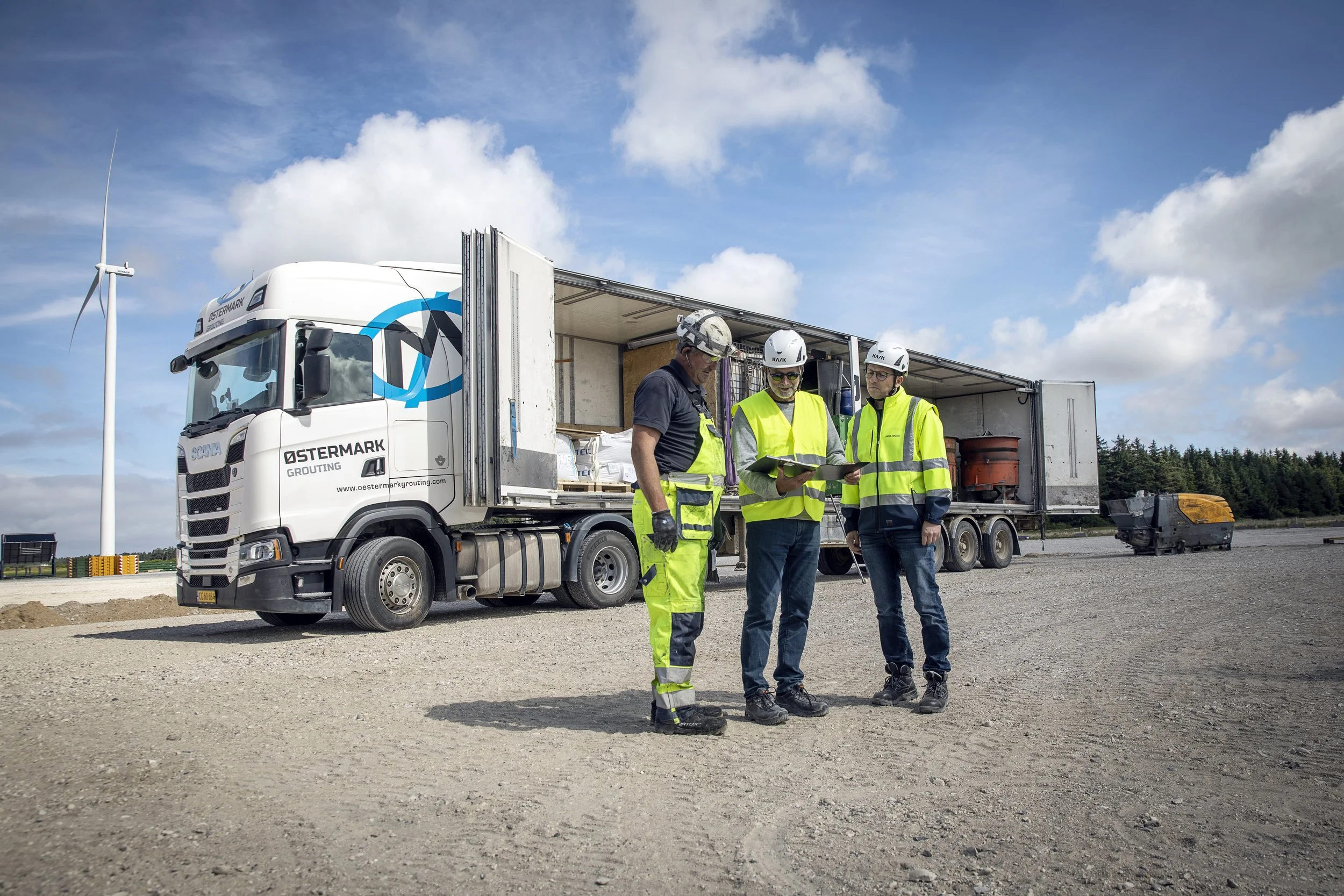
When it comes to lifetime extension in the wind industry, too few look at the foundation – even though this is often where the biggest gains can be made in terms of both operations and economics.
Wind turbines are investments. And their value is determined by how long – and how reliably – they operate. Maintenance is essential.
But there’s a challenge.
Today, wind turbine maintenance is almost entirely focused on mechanical systems and components. That’s where most of the industry’s attention is.
Far too few look at the foundation.
– It’s actually quite surprising. These are major investments and highly advanced technology – yet their integrity is put at risk if the foundation isn’t properly maintained, says Thomas Bak, CEO of Ostermark Grouting.
With many years of experience in the industry, he has seen firsthand what happens when foundation maintenance is overlooked:
– I’ve seen it all: turbines collapsing, mechanical components damaged by vibration, and months of lost production because the turbine was so compromised it had to be replaced, he says, adding:
– All of it could have been avoided with proper foundation maintenance.
In many cases, the root cause is vibration from an unstable foundation – sending stress and movement up through the entire structure.
The industry’s blind spot
When new wind turbines are installed, they typically come with service agreements from the manufacturer. These agreements often run for 15–30 years and cover wear on mechanical components.
But foundation maintenance is almost never included.
And it shows.
– When we’re out doing inspections, we very often see cracks in the concrete, early signs of water ingress, or what we call “dust in the basement,” says Thomas Bak.
These may seem like minor issues at first – but over time, they affect how loads are transferred from the turbine into the foundation.
– It almost always starts small. But if it’s not addressed in time, it develops. And suddenly the turbine no longer behaves the way it was designed to, he explains.
In some cases, the effects become very visible:
– We’ve seen turbines moving by up to a couple of centimeters at the base. It may not sound like much – but it definitely is.
Because movement at the foundation doesn’t stay there.
It travels.
Up through the tower.
Into the drivetrain.
Into components that were never designed for that type of stress.
And that’s when it becomes expensive.
Critical components are exposed to unnecessary stress and wear out faster.
What starts in the foundation becomes a problem for the entire turbine.
From symptom fixing to solving the root cause
It’s difficult to put an exact number on how many turbines could benefit from a foundation inspection – but according to Thomas Bak, the number is significant:
– I wouldn’t be surprised if as many as 70% of all turbines could benefit from a foundation inspection. It’s something that is simply being overlooked across the industry, he says.
Today, repairs often focus on replacing affected components. But rarely do operators look deeper to understand why those components failed in the first place.
And often, the answer lies in the foundation.
– If you don’t address the root cause, you’re really just applying a band-aid solution, he says.
At Ostermark Grouting, all maintenance work starts with a thorough inspection.
Insight before action
During an inspection, Ostermark Grouting assesses cracks in concrete and coatings, signs of water ingress, and other structural indicators. In some cases, this is supplemented with core drilling and endoscopy to understand what’s happening inside the foundation.
– An inspection provides a clear snapshot. We can see the current condition of the foundation and identify existing damage, says Thomas Bak.
Ostermark Grouting’s inspections are known for their level of detail:
– We look at everything. In fact, our inspection reports are often used by other players in the industry as a basis for their work – even when they’re not working on the foundation itself, he says.
When insight requires monitoring
To take a more proactive approach and gain better insight into operational stability, Ostermark Grouting also offers monitoring of turbine assets.
Sensors are installed at the base of the tower to track how the foundation behaves under operational conditions over time.
– By measuring over several months, we can detect movement and understand how it develops. That gives a completely different decision-making basis, explains Thomas Bak.
Monitoring makes it possible to:
detect issues before they become critical
document development over time
determine when it makes sense to intervene
Restoring the foundation
Once the inspection is completed and the issue identified, the focus shifts to restoring stability and ensuring proper load transfer from tower to foundation.
This can be done through:
Grout injection
Voids beneath the foundation are identified through drilling and endoscopy and then filled with high-strength grout to restore contact and stability.
Concrete repair
Damaged concrete is removed – often using hydrodemolition – and rebuilt with new materials to restore structural capacity.
Foundation sealing
The foundation is sealed with elastic coatings to protect against water ingress, corrosion, and further deterioration.
Reinforcement with collar (life extension collar)
A steel collar is installed around the top of the foundation and filled with high-strength grout. This improves load distribution and increases stability, making it possible to upgrade turbines and extend lifetime – often without significant downtime.
– The goal is not just to repair the damage, but to ensure the foundation performs as it was originally designed to. When that’s in place, everything else follows, says Thomas Bak.
Lifetime extension with minimal downtime
In many cases, the work can be carried out without major disruption to operations.
– We often work on turbines that are still running. And in many cases, we can solve the problem quickly, avoiding unnecessary downtime, says Thomas Bak.
This means operators can:
avoid long shutdowns
reduce production losses
extend turbine lifetime without major investments
– The cost of addressing foundation issues is relatively low compared to the lifetime extension you gain, he adds.
And that’s the key point.
Getting more value out of what you already have.
– You can get many additional years out of a turbine if the foundation is in good condition. But you have to start where the problem begins – at the bottom, says Thomas Bak.
Where the real value lies
Because the work can often be done without major downtime, addressing the foundation early makes strong business sense.
In the end, this isn’t just about engineering – it’s about economics.
A turbine that is down quickly becomes a costly loss of production. And if foundation issues are left unresolved, they can lead to extended downtime, major repairs – or in worst cases, full replacement.
– Once problems escalate, it becomes expensive very quickly. Not just in repairs, but in lost production, says Thomas Bak.
Compared to that, inspection and proactive foundation maintenance is a relatively small investment.
– It’s far more cost-effective to act early. That’s where you protect both operations and your bottom line, he says.
Ostermark Grouting is ready
Need help with a foundation inspection?
At Ostermark Grouting, we work with inspection, monitoring, repair, and upgrading of wind turbine foundations.
By understanding what happens below the surface, we help operators reduce downtime and extend the lifetime of their turbines.
From the ground up.